
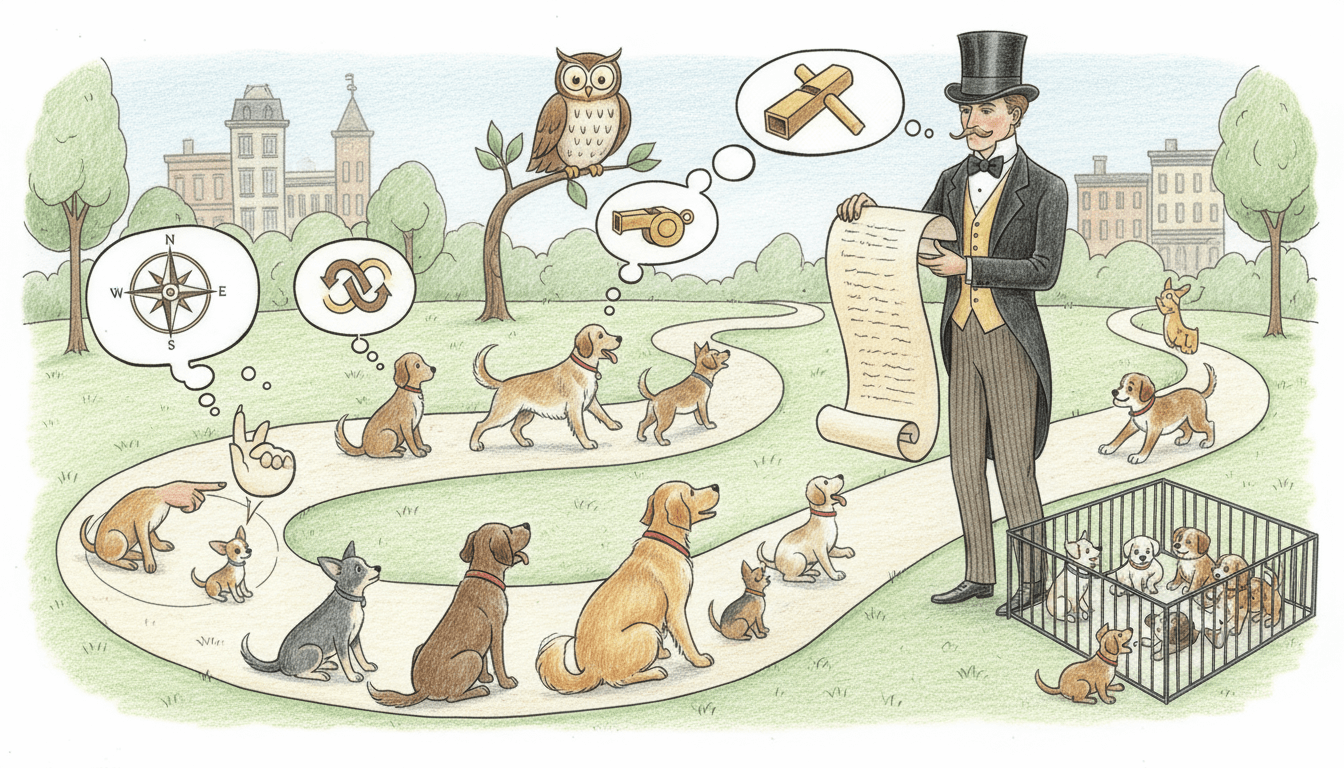
Effective pet training and socialization are foundational to fostering well-behaved, confident, and sociable companions. Rooted in positive reinforcement and consistency, these practices should commence as early as 8 weeks of age, adapting to each pet's developmental stage. This guide delves into scientifically backed methods for dogs, cats, and small animals, emphasizing how structured training and controlled socialization prevent behavioral issues and strengthen the human-animal bond. By integrating treats, toys, and gradual exposure, owners can cultivate desired behaviors and ensure their pets thrive in various environments.
Sections
Core Principles of Positive Reinforcement Training
Positive reinforcement training centers on rewarding desired behaviors to increase their frequency, leveraging treats, praise, or toys as incentives. Studies show this method enhances learning rates by up to 30% compared to punitive approaches. For optimal results, begin training at 8 weeks, when pets are most receptive to new cues. Consistency is vital; use clear commands and immediate rewards to avoid confusion. For instance, when teaching a dog to 'sit,' offer a treat within 2 seconds of compliance. This approach not only builds obedience but also trust, reducing anxiety and aggression risks by 40% in social settings.
Species-Specific Training Techniques
Dogs excel with command-based training, mastering basics like 'sit,' 'stay,' and 'come' through repetitive, 5–10 minute sessions. Incorporate high-value rewards, such as small meat pieces, to maintain engagement. Cats, though independent, respond well to treat-lure training for commands like 'come' or leash-walking; use 1–3 minute sessions to match their attention spans. Small animals, including rabbits and guinea pigs, benefit from clicker training—a technique where a click sound marks correct behavior, followed by a treat. Research indicates clicker training can improve task acquisition by 50% in rodents, making it ideal for teaching tricks or litter-box use.
The Critical Role of Socialization
Socialization involves controlled exposure to diverse stimuli—people, animals, sounds, and environments—during a pet's critical developmental period (8–16 weeks). Proper socialization can decrease fear-based behaviors by 60%, according to veterinary studies. For dogs, introduce them to 5–10 new people weekly in calm settings; for cats, use carrier training for vet visits. Small animals benefit from handling exercises to reduce stress. Always prioritize safety: supervise interactions and proceed gradually. For example, a puppy meeting another vaccinated dog in a neutral area learns appropriate play, reducing future aggression risks.
Implementing Consistency and Patience
Training success hinges on consistency across all household members and environments. Establish a routine with daily 10–15 minute sessions, using uniform commands and rewards. Patience is equally crucial; avoid punishment, which can lead to fear and setbacks. Track progress with a journal, noting improvements like faster response times. For instance, if a cat learns to 'high-five' in two weeks, reinforce it weekly to prevent extinction. Data shows consistent training boosts retention by 70%, ensuring long-term behavioral stability.
Key Takeaways
Start training at 8 weeks using positive reinforcement for optimal results.
Tailor methods to species: dogs with commands, cats with lures, small animals with clickers.
Socialize pets early to reduce behavioral issues by 60%.
Maintain consistency in commands and rewards to enhance learning retention.
Avoid punitive measures to build trust and prevent anxiety.
Frequently Asked Questions
What is the best age to start training a pet?
How can I socialize a fearful pet?
Is clicker training effective for all pets?
How long should training sessions last?
Conclusion
Training and socialization are indispensable for nurturing well-adjusted pets. By employing positive reinforcement from 8 weeks onward, tailoring techniques to species, and prioritizing consistent socialization, owners can mitigate behavioral problems and enhance their pet's quality of life. Embrace patience and avoid punitive methods to foster a lifelong bond built on trust and mutual respect.