
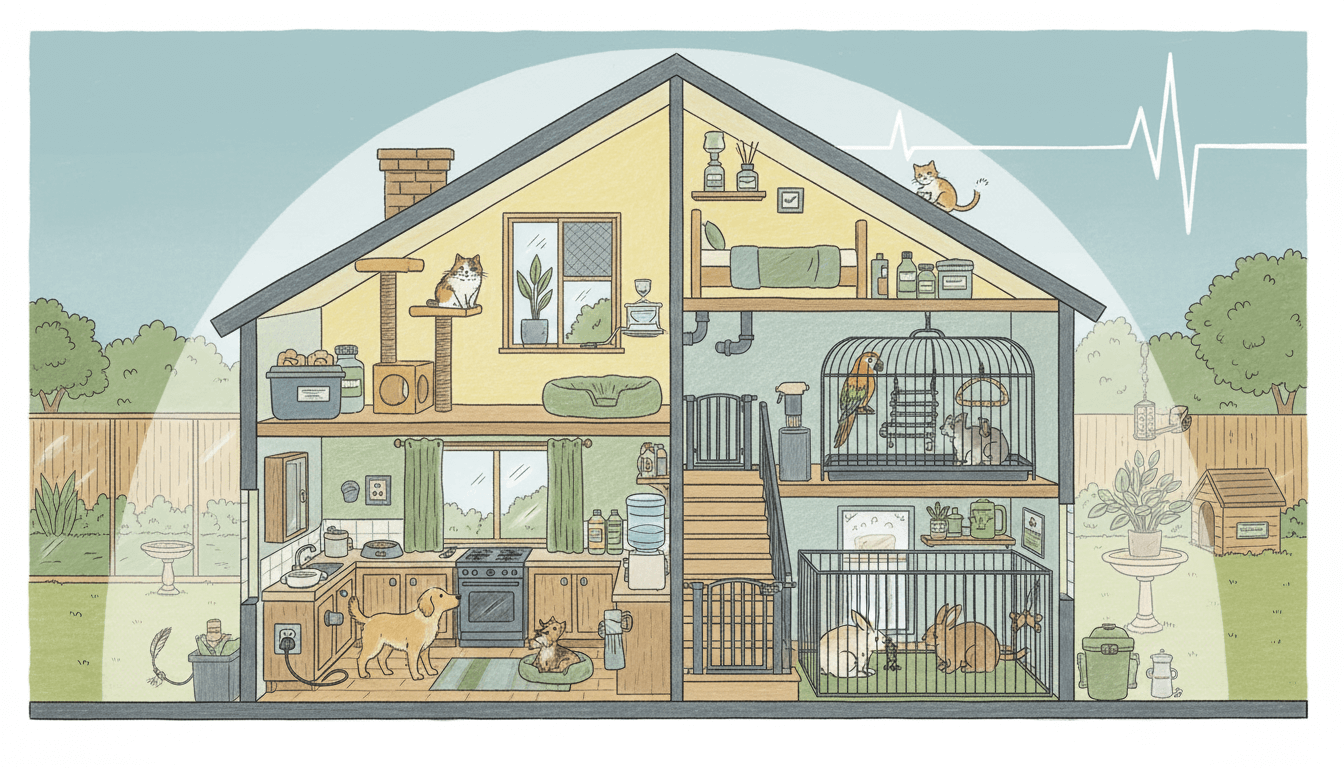
Creating a safe and nurturing home environment is essential for your pet's health and happiness. With over 85 million households in the U.S. owning pets, according to the American Pet Products Association, ensuring their living spaces are hazard-free and comfortable is a top priority. This guide draws from the Pet Home Safety and Environment Guide to provide actionable strategies for identifying risks like electrical cords and poisonous plants, setting up secure areas, and making ongoing adjustments to accommodate your pet's evolving needs. By implementing these measures, you can significantly reduce the risk of accidents and enhance your pet's quality of life.
Sections
Identifying and Eliminating Common Safety Hazards
Electrical cords pose a severe risk, as chewing can lead to electrocution or burns; use cord covers or conceal them behind furniture to prevent access. Poisonous plants, such as lilies, sago palms, and philodendrons, are responsible for nearly 10% of pet poisoning cases—remove them or place them out of reach. Unsecured windows can result in falls, especially for cats; install screens or limit openings to less than 4 inches. Additionally, secure loose items like small objects that may cause choking, and store chemicals in locked cabinets. Regularly inspect your home for these hazards, focusing on areas your pet frequents, to create a baseline of safety.
Designing Comfortable and Functional Living Spaces
Provide orthopedic or memory foam beds in quiet, draft-free zones to support joint health and reduce stress. Designate play areas with non-toxic, durable toys—avoid those with small parts that could be swallowed. For example, rubber chew toys and puzzle feeders engage pets mentally and physically. Establish resting spots away from high-traffic areas to encourage relaxation, and use baby gates or pet pens to define boundaries. Ensure these spaces are easily accessible, particularly for senior pets or those with mobility issues, by adding ramps or non-slip flooring. A well-organized environment promotes routine and minimizes anxiety.
Implementing Environmental Adjustments for Life Stages and Seasons
Puppies and kittens require puppy-proofed or kitten-safe zones with soft bedding and chew-resistant items, while senior pets may need heated pads or lowered food bowls for arthritis. Seasonal changes demand attention: in winter, provide extra insulation and avoid antifreeze exposure; in summer, ensure cool, shaded areas and fresh water to prevent heatstroke. Monitor humidity levels, as extremes can affect respiratory health. Update your pet's environment every 6-12 months or after major life events, such as illness or moving, to address new risks and comforts. This proactive approach aligns with veterinary recommendations for preventative care.
Conducting Regular Safety Audits and Maintenance
Perform monthly home inspections to check for wear and tear on toys, bedding, and safety features. Test smoke and carbon monoxide detectors, and ensure emergency exits are pet-accessible. Keep a pet first-aid kit stocked with bandages, antiseptics, and contact information for your veterinarian. Document any behavioral changes that might indicate environmental stress, like excessive barking or hiding, and adjust setups accordingly. By maintaining a log of audits, you can track improvements and quickly address emerging issues, reducing the likelihood of accidents by up to 70% based on pet safety studies.
Key Takeaways
Remove hazards like electrical cords and toxic plants to prevent injuries and poisoning.
Provide designated areas with comfortable bedding and safe toys to support well-being.
Update environments seasonally and for life stages to meet changing pet needs.
Conduct regular safety audits to identify and mitigate risks proactively.
Frequently Asked Questions
What are the most common household hazards for pets?
How often should I update my pet's living environment?
What type of bedding is safest for pets?
How can I pet-proof my home effectively?
Conclusion
A safe and adaptable home environment is key to your pet's longevity and happiness. By systematically addressing hazards, creating dedicated spaces, and performing routine updates, you can foster a secure setting that evolves with your pet's needs. Consistent vigilance and professional guidance from resources like the Pet Home Safety and Environment Guide will help you build a foundation for a thriving, accident-free life together.